Premium Porcelain Tiles Supplier for Australian Homes
November 17, 2026

Choosing the right window coverings can change how a room looks, feels and functions. Curtains add softness and warmth, while roller blinds offer a neat, modern finish. Both can improve privacy and help manage natural light, but they work in different ways.
If you're comparing curtains vs roller blinds, the best choice depends on your priorities. You might want a darker bedroom, a brighter living area, easier cleaning or better temperature control throughout the year.
In this guide, we'll compare both options to help you choose the right window treatment for your home.

Curtains are fabric panels that hang from a track or rod above a window. They come in different materials, colours, patterns and thicknesses, making them suitable for both traditional and contemporary interiors.
Sheer curtains soften daylight while maintaining a bright atmosphere. Blockout curtains use thicker fabric or a special lining to reduce incoming light. Thermal-lined options can also help improve indoor comfort when fitted appropriately.
Curtains are particularly useful when you want to add texture, create a cosy atmosphere or make a room feel more finished.
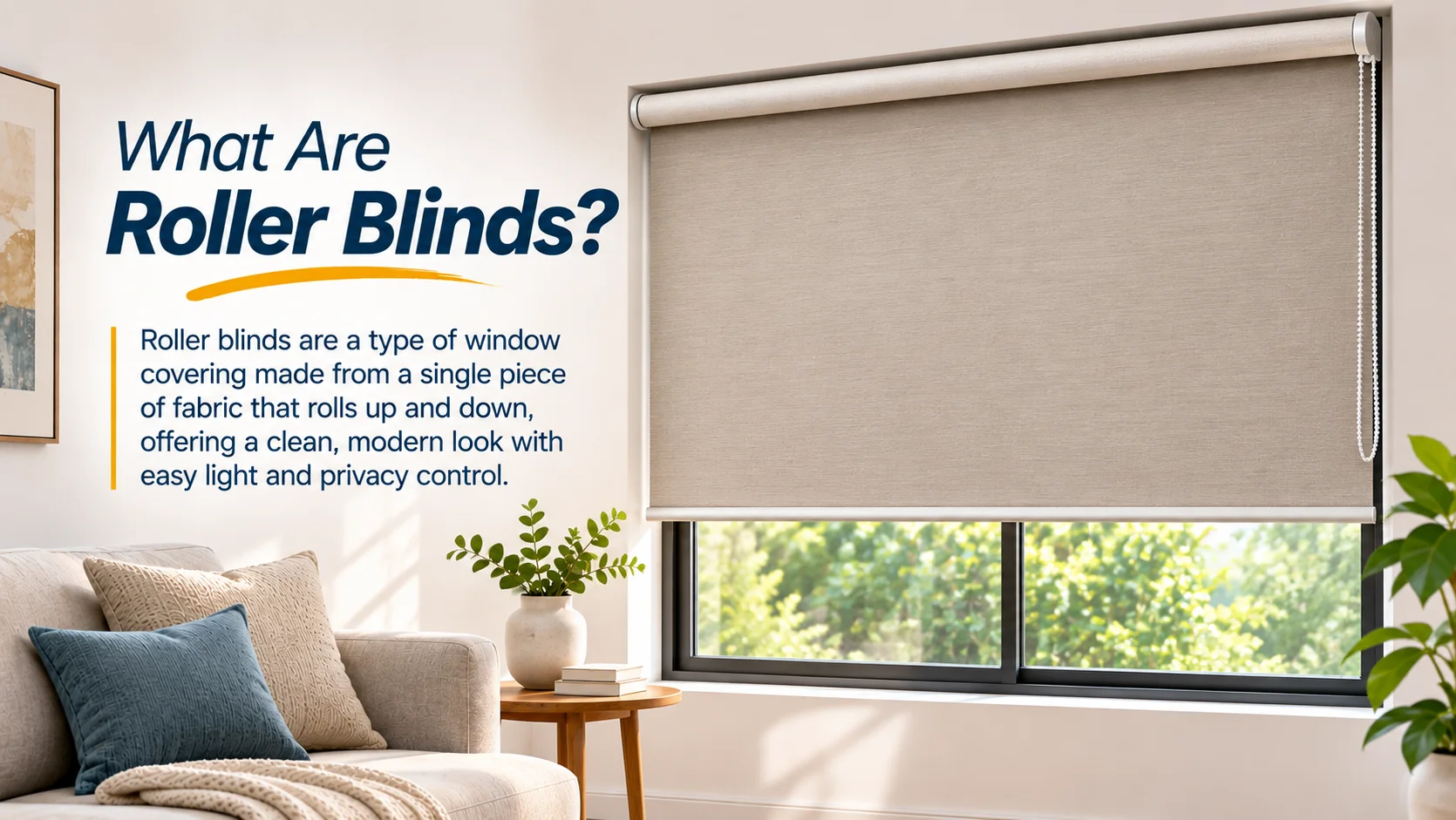
Roller blinds consist of a fabric panel that winds around a roller fitted above the window. They can be raised or lowered to control light, privacy and glare.
Their simple design works well in modern homes, apartments and rooms where space is limited. Roller blinds are available in sunscreen, light-filtering and blockout fabrics, allowing you to select an option that suits your needs.
They also sit close to the window, creating a clean appearance without the folds and bulk of traditional curtains.
Both window coverings have advantages, but their performance depends on the fabric, installation and intended use.
| Feature | Curtains | Roller Blinds |
|---|---|---|
| Appearance | Soft, decorative and versatile | Minimal, neat and modern |
| Light control | Excellent with suitable linings | Flexible, depending on fabric |
| Privacy | Strong with appropriate coverage | Good with the right fabric and fit |
| Insulation | Can perform well with thick lining and close coverage | Varies by fabric, fit and installation |
| Maintenance | May require washing or professional cleaning | Usually easy to dust or wipe |
| Space requirements | Need room to stack when open | Compact when raised |
| Style options | Extensive fabric, colour and pattern choices | Wide range of colours and functional fabrics |
| Best suited for | Bedrooms, living rooms and layered interiors | Kitchens, studies and contemporary spaces |
Neither option is automatically better for every home. The most suitable choice depends on which features matter most to you.
Light control and privacy are often the biggest considerations when choosing window coverings.
Curtains provide flexible coverage through different fabric weights and linings. Sheer curtains diffuse sunlight, while blockout curtains are useful when you want a darker room for sleeping or watching television.
Roller blinds offer straightforward adjustment. You can lower them partially to reduce glare or close them fully for greater privacy. Sunscreen fabrics help manage glare while retaining some outward visibility during the day, although they generally offer limited privacy at night when indoor lights are on.
For bedrooms and street-facing windows, consider how much privacy you need after dark. A blockout roller blind or lined curtain can work well, but the fit matters. Light may still enter around the edges of either option.
Which is better? Choose curtains for soft light and broad coverage, or roller blinds for a streamlined design and convenient adjustment. If you need both daytime light management and nighttime privacy, a dual roller blind or layered window treatment may be more practical.
Window coverings can help regulate indoor temperatures, particularly when windows allow unwanted heat to enter or escape.
Thick, lined curtains can create an insulating layer near the window. Their performance improves when they fit closely, extend beyond the sides and reach towards the floor. Pelmets can also help reduce air movement around the top of the curtain.
Roller blinds provide an additional barrier between the glass and the room. However, standard designs may leave gaps along the sides and bottom, allowing air to circulate. Blockout fabrics and a well-fitted installation can improve coverage, although a typical roller blind is not equivalent to insulated glazing.
For Australian homes, the right choice also depends on the climate and window orientation. Rooms exposed to strong afternoon sun may benefit from effective solar shading, while colder rooms may need close-fitting, lined coverings.
If temperature control is a priority, compare the full setup rather than choosing based on the product name alone. Fabric, lining, fit and existing window insulation all affect the result.
The cost of window coverings varies according to window dimensions, material quality, customisation and installation requirements.
Roller blinds can be an economical choice because their construction is relatively simple and they use less visible fabric. Standard sizes may also help control costs when they suit the window.
Curtains can cost more when you choose premium fabrics, full-length panels, decorative headings or specialist linings. However, affordable ready-made curtains are also available, so they are not always the more expensive option.
Before comparing quotes, consider:
For a fair comparison, request quotes for the same window sizes and similar light-control requirements. The lowest initial price may not be the best value if the product does not meet your needs.

Bedrooms often benefit from blockout curtains or blockout roller blinds. Both can reduce incoming light, helping create a more comfortable sleeping environment.
Choose curtains if you prefer a softer appearance and additional fabric coverage. Roller blinds may suit smaller bedrooms where a compact design is important.
For greater flexibility, combine a roller blind with sheer or blockout curtains.
Living rooms need a balance between natural light, privacy and appearance. Curtains can add texture and create a more inviting atmosphere, especially in rooms with large windows.
Roller blinds suit contemporary interiors and can help manage glare on televisions or computer screens. Pairing blinds with sheer curtains offers both practical light control and a softer finish.
Roller blinds are often practical in kitchens and bathrooms because they have a simple design and are generally easy to clean.
However, not every blind fabric is suitable for humid conditions or direct contact with water. Check the manufacturer's care instructions and material specifications before installation.
Curtains can work in these spaces too, but fabric choice, ventilation and moisture management become more important.
A home office needs enough natural light without excessive screen glare. Sunscreen or light-filtering roller blinds can help manage brightness while maintaining a clean appearance.
Curtains may suit offices where softness and decoration are priorities, but the right fabric is important. Consider how sunlight moves across the room during your working hours before making a decision.
Yes. Combining curtains and roller blinds can give you greater control over light, privacy and appearance.
A roller blind can provide everyday glare management and privacy, while curtains add texture and a decorative finish. Adding a blockout curtain can also improve darkness at night, depending on its lining and fit.
This combination works particularly well in bedrooms and living rooms where you want practical functionality without sacrificing style.
However, layering is not necessary for every window. If you prefer a minimal interior or have a limited budget, one well-chosen window covering may be enough.
Choosing between curtains and roller blinds is one part of creating a comfortable, well-designed home. Your flooring, wall finishes, and window coverings should work together to create a balanced look.
GNS Imports offers tiles, stones, and flooring solutions for residential and commercial projects. When planning a room, consider how your window coverings will complement your flooring material, colour, and finish.
For example, soft curtains can pair well with natural stone flooring to create a warm, inviting atmosphere. Roller blinds can complement modern porcelain tiles and clean-lined interiors. If you prefer a layered look, combine both window coverings with flooring that matches your overall design.
Buy Curtains Blinds & Roller Blinds
When deciding between curtains vs roller blinds, start with how you use each room rather than choosing the same window covering throughout your home.
Choose curtains if you value fabric, decorative flexibility, softer interiors and the potential insulation benefits of lined, close-fitting designs. Choose roller blinds if you prefer a compact appearance, convenient operation and straightforward maintenance.
If your priorities include both appearance and functionality, combining the two may be the most practical solution.
Before buying, measure your windows carefully, compare fabric samples, check cleaning requirements and consider how much light and privacy each room needs. A thoughtful choice will help you create a home that feels comfortable, looks cohesive and suits your everyday routine.
Before finalising your choices, consider the room's natural light, colour palette, and daily use. Explore the range of tiles, stones, and flooring at GNS Imports to find materials that complement your interior design plans.
Neither is universally better. Curtains are often preferred for softness, decorative variety and insulation when properly lined and fitted. Roller blinds are popular for their compact design, straightforward operation and easy maintenance.
Blockout roller blinds can provide strong nighttime privacy when fully lowered and correctly fitted. Sunscreen blinds, on the other hand, may allow people to see inside when interior lights are on. Always check the fabric's privacy characteristics before buying.
Thick, lined curtains can help reduce heat loss when they cover the window closely and limit air movement. Roller blinds can also provide some insulation, but results depend on fabric, fit and installation. Neither option replaces proper window insulation.
Roller blinds are generally easier to maintain because many fabrics can be dusted or wiped according to the manufacturer's instructions. Curtains may need vacuuming, washing or professional cleaning, depending on their material and care label.
Yes. A roller blind can be fitted inside or near the window frame, with curtains installed on a separate track or rod. Check the available mounting space and operating clearance before purchasing both.
Recent Blog Posts

Premium Porcelain Tiles Supplier for Australian Homes
November 17, 2026
Engineered Timber Flooring: A Complete Buying Guide
November 16, 2026
Tapware Buying Guide: How to Choose the Right Bathroom Tap
November 13, 2026
Is Hybrid Flooring Waterproof? What to Know
October 07, 2026
Mosaic Tile Colours for Modern Interior Spaces
October 05, 2026