Premium Porcelain Tiles Supplier for Australian Homes
November 17, 2026

Choosing the right flooring can transform the appearance and feel of your home. From creating a warm living room to giving an open-plan space a sophisticated finish, timber flooring remains a popular choice for modern interiors.
However, traditional solid timber is not the only option available. Engineered timber flooring offers the natural appearance of real wood with a layered construction designed to improve dimensional stability.
But how do you choose the right product? What should you look for before buying, and is it suitable for your home?
This complete buying guide explains the key features, benefits, limitations, installation requirements, and maintenance considerations to help you make an informed decision.
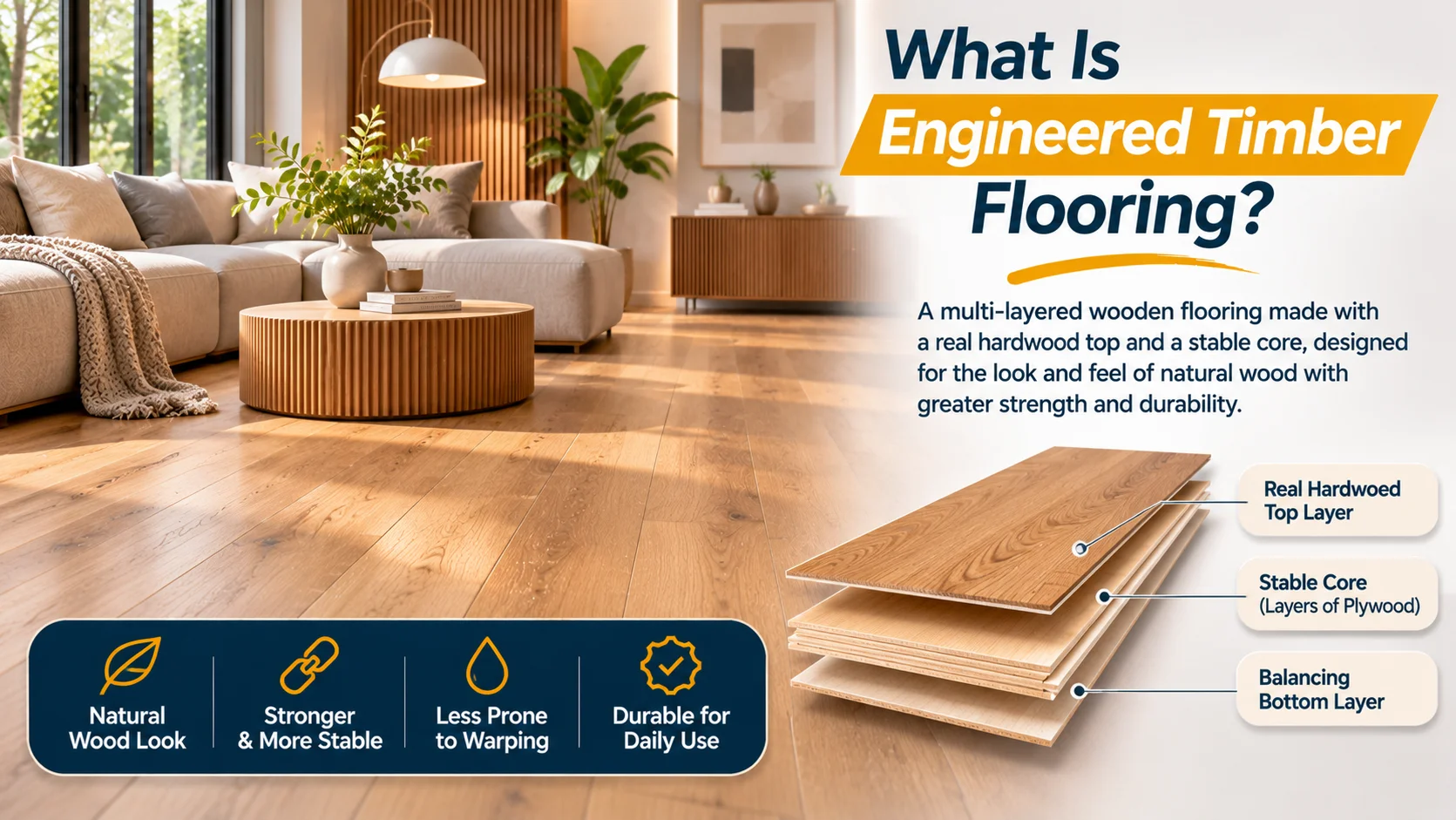
Engineered timber flooring is made from multiple layers of material bonded together to create a stable flooring board. Its upper layer consists of genuine timber, while the supporting layers are typically made from plywood or other engineered wood materials.
Unlike laminate flooring, which uses a printed decorative surface, engineered timber features real wood on top. This gives each board natural grain patterns, textures, and variations in appearance.
The exact construction depends on the manufacturer and product specification. Before purchasing, check the timber wear-layer thickness, core material, total board thickness, surface finish, and warranty.
These details help you understand the floor's expected performance, maintenance requirements, and potential for future refinishing.
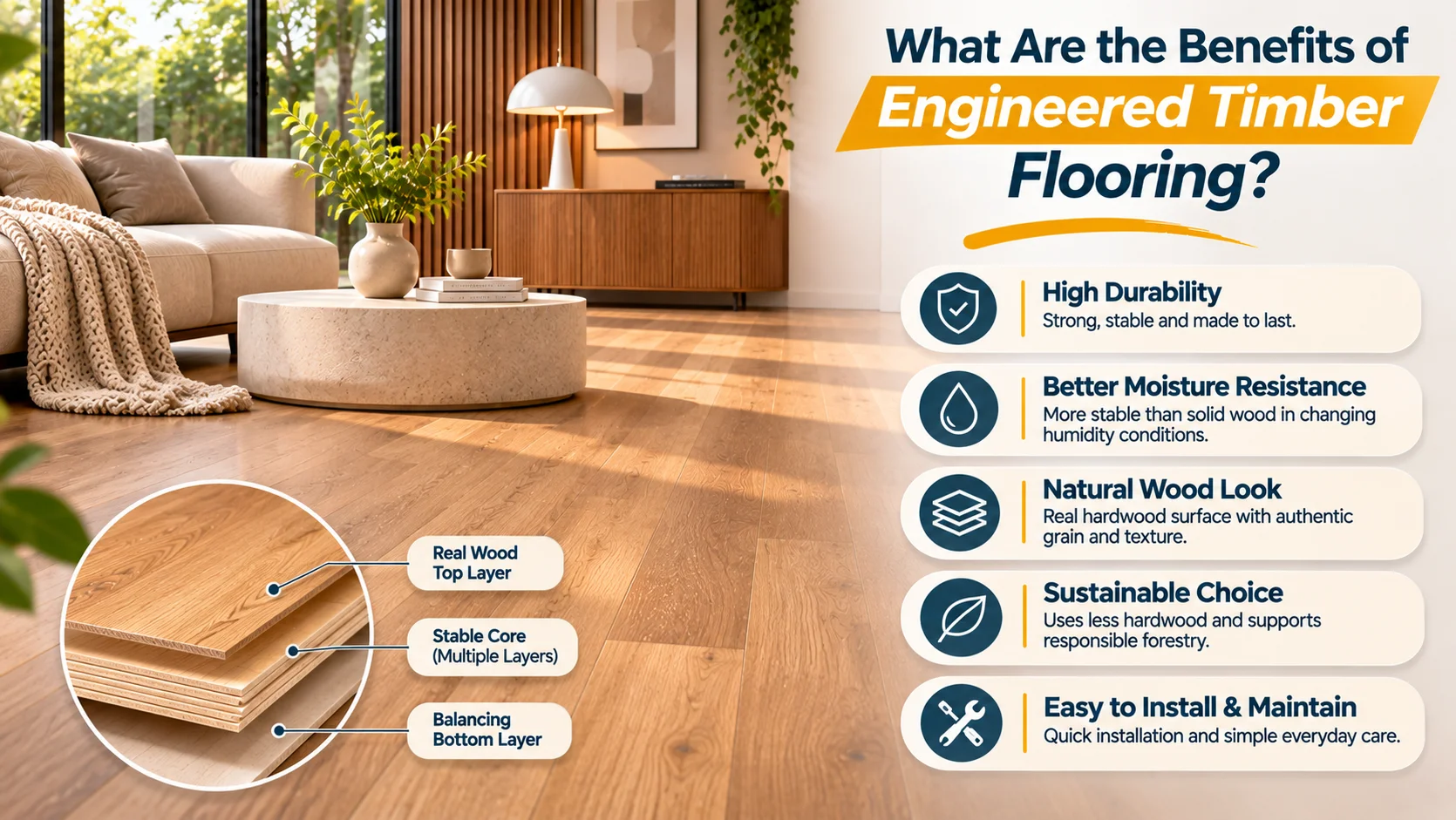
Engineered timber flooring offers several advantages for residential renovations and new construction projects.
One of its biggest attractions is its genuine timber surface. The natural grain, knots, and colour variations create character that complements many interior design styles.
Depending on the product, you can choose from light oak tones, warm brown finishes, darker shades, and other timber species.
The layered construction is designed to help reduce the movement that can occur when timber responds to changing environmental conditions.
This can make engineered flooring a practical alternative to solid timber in suitable installations. Correct moisture management and installation remain essential for long-term performance.
Depending on the product, engineered timber flooring may be installed using a floating or glue-down method.
Some products are suitable for installation over concrete subfloors, while others may be installed over approved existing flooring systems.
Always check the manufacturer's installation instructions before selecting a product for your project.
Engineered timber is available in different plank widths, lengths, finishes, and colours.
Straight planks can create a clean, contemporary appearance, while herringbone or chevron patterns can introduce a more decorative element.
The right choice depends on the room's proportions, furniture, lighting, and overall design.
Before comparing products, identify your priorities. Consider the room, household activity, preferred style, installation conditions, and available budget.
The wear layer is the real timber surface visible after installation. Its thickness is an important factor when evaluating a product's potential for future sanding and refinishing.
Wear layers vary between products. A thicker layer may provide more refinishing potential, but it does not automatically guarantee better overall quality.
Ask the supplier to confirm the actual thickness and whether the manufacturer permits sanding or refinishing.
Different timber species have distinct colours, grain patterns, and hardness characteristics.
Oak is popular for its versatile appearance, while other timber species can offer different tones and grain structures.
If scratch resistance is important, compare the species' hardness alongside the surface finish. Remember that even harder timber can be scratched or dented.
The finish affects the floor's appearance, cleaning requirements, and resistance to everyday wear.
Common options include:
Review the manufacturer's care instructions before choosing a finish.
Total board thickness and timber wear-layer thickness are different measurements.
A thicker board does not necessarily have a thicker real timber surface. Compare both measurements, along with the core material and construction quality.
Also check whether the board dimensions suit your project and whether the product is compatible with your existing subfloor.
Light timber tones can help create an open, airy feel, while darker shades can add depth and contrast.
Natural oak colours often complement neutral walls, contemporary furniture, and warm interior finishes.
Before ordering, view a physical sample in your home if possible. Natural light, artificial lighting, wall colours, and surrounding materials can affect how the flooring appears.
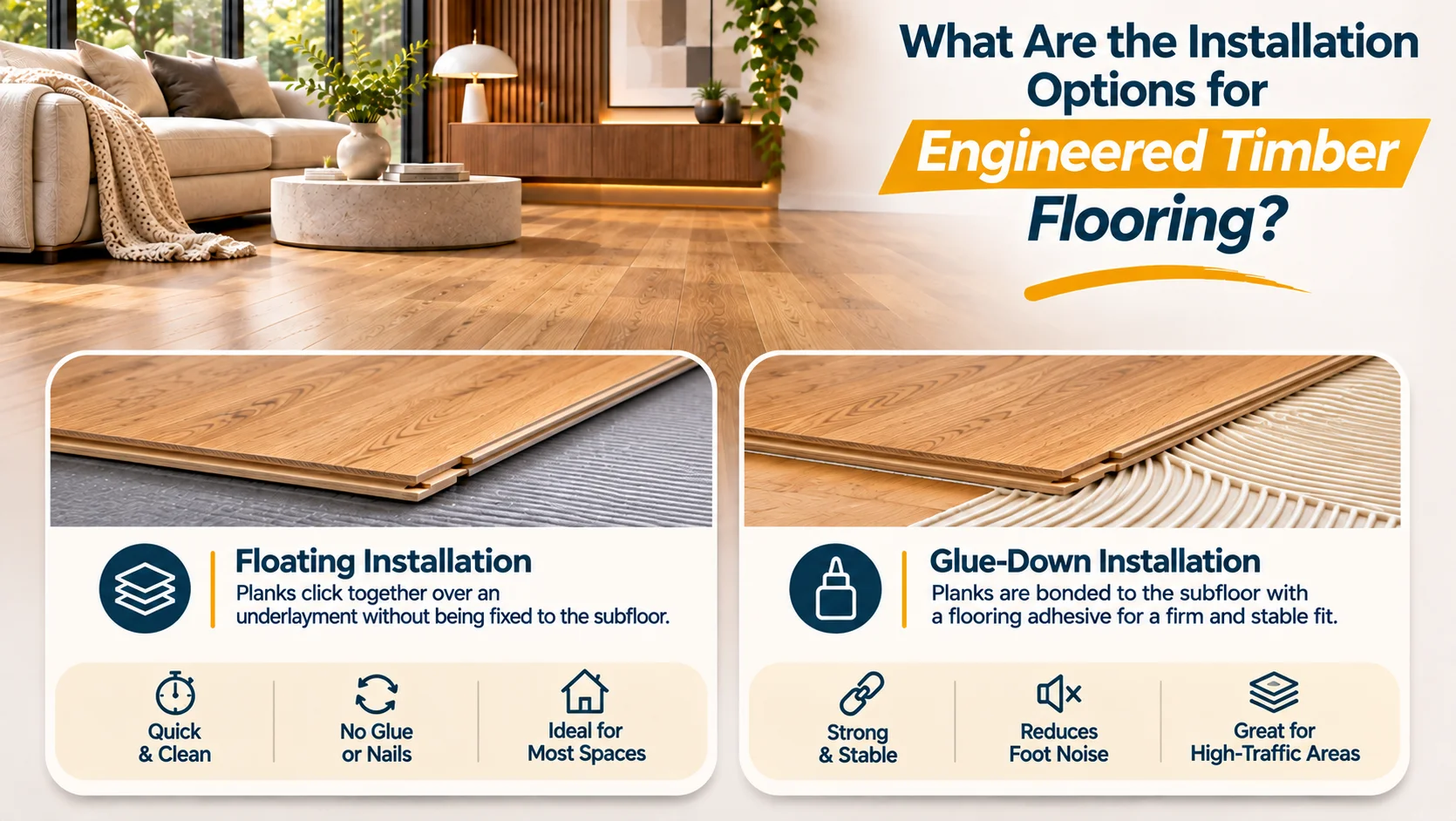
Installation requirements vary by product, so selecting the right method is essential.
With a floating installation, the boards connect to one another and sit over an appropriate underlay without being directly fixed to the subfloor.
This method may simplify installation in suitable spaces. However, the floor still needs a properly prepared subfloor, the correct underlay, and appropriate expansion allowances.
With glue-down installation, the flooring is bonded directly to an approved subfloor using a compatible adhesive.
This method can provide a firm feel underfoot, but it requires careful surface preparation and moisture assessment.
Before installation, confirm that the subfloor is clean, level, structurally sound, and sufficiently dry. Follow the flooring and adhesive manufacturers' instructions, including any requirements for moisture barriers.
Using an experienced installer can help reduce the risk of movement, gaps, lifting, and other avoidable problems.
Engineered timber flooring can be suitable for many Australian homes when the product and installation method match the property's conditions.
Living rooms, bedrooms, dining areas, and other appropriate indoor spaces can benefit from its natural appearance.
However, Australia's climate varies considerably. Changes in humidity, indoor temperature, direct sunlight, and moisture exposure can affect timber flooring.
Kitchens may be suitable for certain products, provided spills are managed promptly and the manufacturer permits installation in that environment.
Bathrooms, laundries, and other areas exposed to frequent water or excessive moisture generally require a different approach unless a specific product is expressly approved for those conditions.
If you are installing flooring over a concrete slab, arrange appropriate moisture testing before installation. Do not assume that a concrete surface is dry simply because it looks dry.
For homes with underfloor heating, check product compatibility and the manufacturer's temperature limits before proceeding.
Regular care helps preserve the appearance of your flooring and reduces avoidable wear.
Follow these practical maintenance tips:
With suitable care, engineered timber can retain its natural appearance for many years. Its actual lifespan depends on product quality, installation, household use, and maintenance.
If you are comparing flooring options, it helps to understand how they differ.
| Feature | Engineered Timber | Hybrid Flooring | Laminate Flooring |
|---|---|---|---|
| Surface | Genuine timber | Usually a printed decorative layer | Printed decorative layer |
| Appearance | Natural timber grain and variation | Timber-look designs | Timber-look designs |
| Water resistance | Product-dependent; timber remains moisture-sensitive | Many products offer high water resistance | Product-dependent |
| Refinishing | Possible for some products, depending on the wear layer | Generally not designed for sanding and refinishing | Generally not designed for sanding and refinishing |
| Main consideration | Timber care and moisture management | Product specifications and installation requirements | Wear-layer protection and moisture limitations |
The best choice depends on your priorities.
Choosing flooring involves more than selecting a colour. You also need to consider the room's purpose, subfloor conditions, maintenance requirements, and how the flooring will complement other interior finishes.
GNS Imports offers a range of flooring options alongside tiles, stone, and other interior products for Australian homes and projects.
When planning your flooring upgrade, compare the available materials and request product information to understand their specifications, installation requirements, and suitability for your space.
You can also explore the flooring collection at GNS Imports to compare available options for your project.
Taking time to evaluate these details can help you select a floor that suits your design preferences, practical requirements, and budget.
Buy Best Engineered Timber Flooring
Engineered timber flooring combines the natural appearance of genuine wood with a layered construction designed to improve dimensional stability. It can be an attractive choice for homeowners who want timber character and a versatile range of finishes.
The key is to look beyond appearance. Compare the timber wear layer, core construction, surface finish, installation method, moisture requirements, and warranty before making a purchase.
By understanding these factors, you can choose engineered timber flooring that complements your interiors and suits the practical needs of your home.
It can last for many years, depending on product quality, installation, and maintenance.
No. It is moisture-sensitive and should be protected from standing water and spills.
Yes, some products can be refinished, depending on their timber wear-layer thickness.
Yes, some products are suitable for kitchens if installed according to the manufacturer's guidelines.
Yes, but scratches and dents are possible. Choose a durable finish and maintain it regularly.
Engineered timber offers a real wood surface, while hybrid flooring generally provides better water resistance.
Recent Blog Posts
Premium Porcelain Tiles Supplier for Australian Homes
November 17, 2026
Tapware Buying Guide: How to Choose the Right Bathroom Tap
November 13, 2026
Curtains Blinds vs Roller Blinds: Which Is Better?
November 02, 2026
Is Hybrid Flooring Waterproof? What to Know
October 07, 2026
Mosaic Tile Colours for Modern Interior Spaces
October 05, 2026